

Why subscribe?
Most political writing reacts to events. The Political Vise explains the forces behind them.
I spent decades on the inside: building the Illinois Policy Institute into one of the most consequential state think tanks in the country, co-founding the Liberty Justice Center that won Janus v. AFSCME at the U.S. Supreme Court, and leading the American Culture Project.
The purpose of the essays you’ll find here is, ideally, to go deeper than political punditry, trace real institutional cause and effect, and avoid the cheap dopamine of outrage culture. You’ll get honest analysis from a distinct point of view, original arguments, and a framework for understanding why so much of American politics feels disconnected from democratic control.
This Substack develops the ideas behind my book, The Political Vise, expanding its arguments through real-time analysis, case studies, and institutional history as events unfold.
If you want to understand the system you're living inside. Whether you plan to reform it, resist it, or simply stop being confused by it, I kindly invite you to subscribe.
About the book
My literary debut, The Political Vise: How the Radical Left Controls America and the Path to Regaining Our Liberty, comes out in March 2026, courtesy of RealClear Publishing.
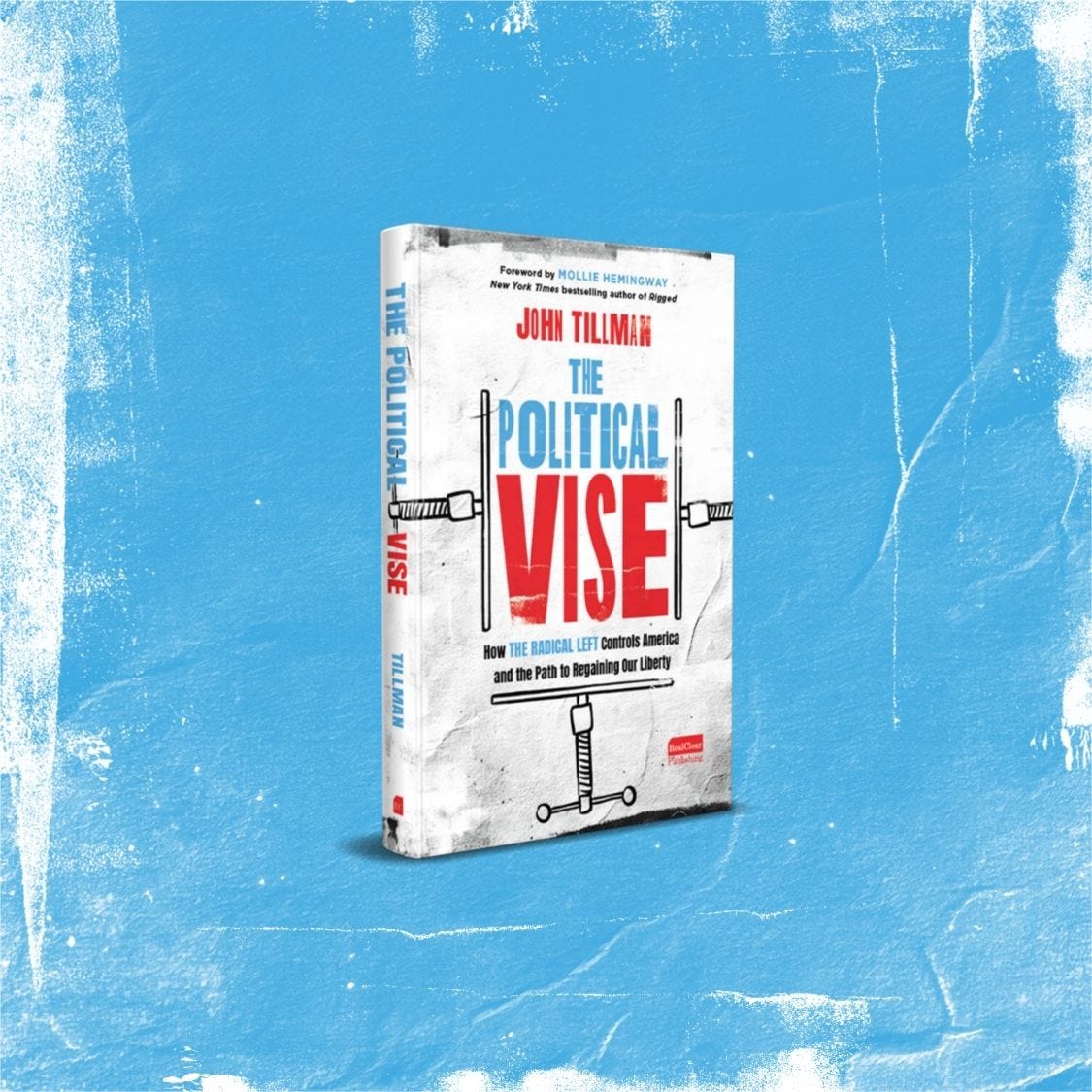
The book lays out the full framework: how institutional capture happened, why winning elections alone can’t undo it, and what it would actually take to rebuild durable centers of cultural and civic power.
A lot of what I write here is an extension of that project: testing ideas in real time, sharpening them against current events, and making the argument as it evolves.
Why I write here
Over several decades, I’ve worked inside politics, around government, and alongside the institutional machinery that now dominates American life—on Capitol Hill, in state policy battles, and in fights over education, free speech, family, and cultural influence.
What I kept watching was this: power doesn’t disappear after an election. It migrates away from voters, toward permanent systems that are almost impossible to hold accountable. Political energy gets absorbed, redirected, neutralized—not through honest debate, but through process, credentialing, and moral pressure.
This Substack is where I get to say all this out loud. Longer arguments. Clearer lines of causation. Less deference paid to the institutions that prefer the conversation stay politely vague.
It’s about the institutions that actually run things—the ones that shape culture, narrow debate, and quietly determine what’s possible long before anyone steps into a voting booth.
It’s about media, universities, bureaucracies, nonprofits and NGOs, philanthropy, and corporate boards. These aren’t neutral players. They don’t just reflect political outcomes—they produce them. They decide which ideas are respectable, which questions are even permitted, and which moral frameworks get enforced by default.
Once you see that clearly, a lot of modern politics stops being confusing.
Join the conversation
Be part of a community of like-minded people who share your intellectual predispositions. Freely give me feedback from the comments section, or simply support this work and its mission by subscribing.
Thank you.
To learn more about the tech platform that powers this publication, visit Substack.com.
