

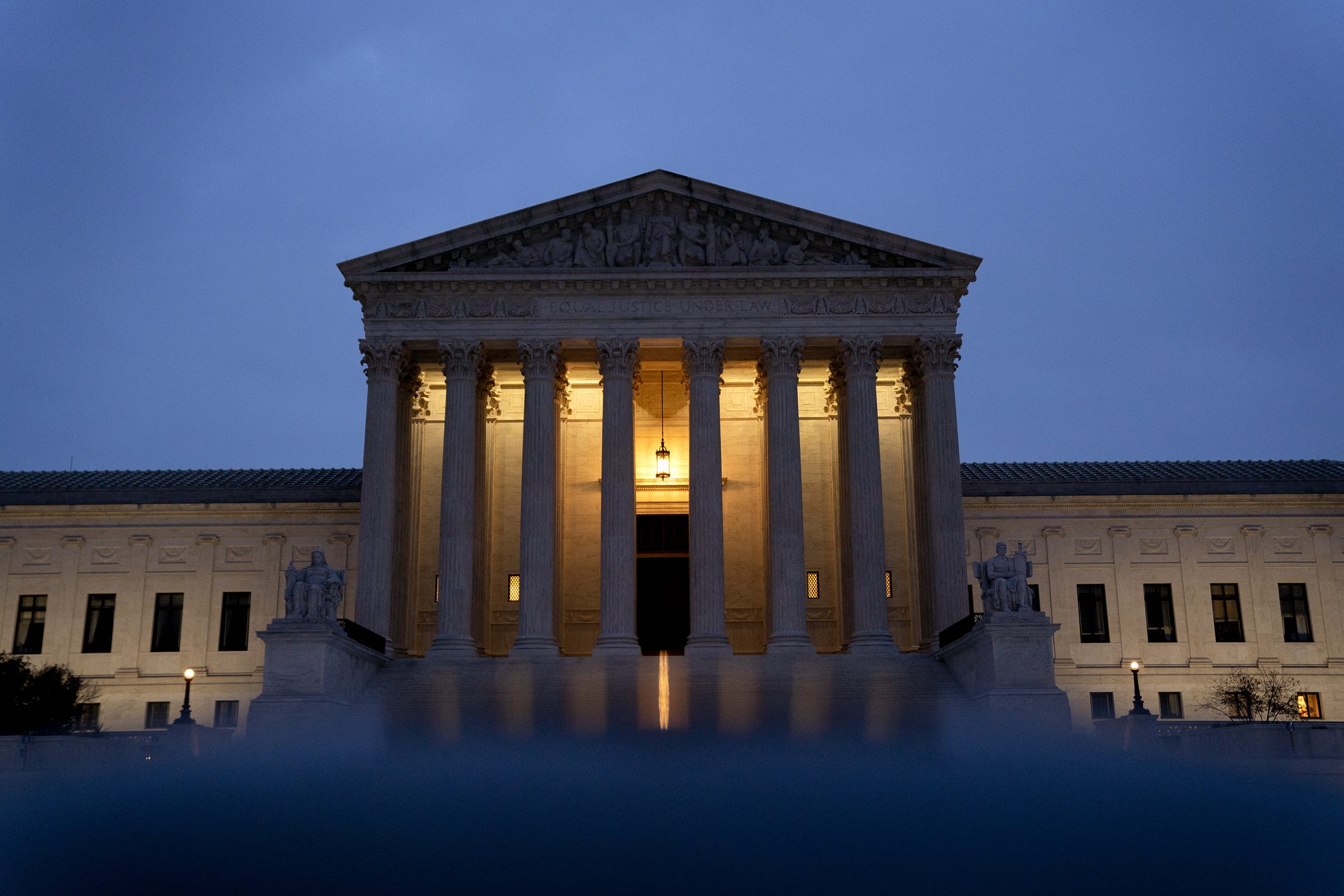
Last Friday afternoon, the Supreme Court struck down most of President Trump’s tariffs. Markets surged. Trump attacked two justices he’d appointed. Importers started calculating potential refunds running into the hundreds of billions.
And Congress? Silent. Watching from the sidelines. Having created the whole mess in the first place.
The International Emergency Economic Powers Act (IEEPA) says the president can “regulate … importation” during national emergencies. Does that include tariffs? Congress never said. For nearly fifty years, no president thought it did. Then Trump tried it. The Supreme Court had to decide.
Chief Justice Roberts wrote: “Based on two words separated by 16 others in … IEEPA—’regulate’ and ‘importation’—the President asserts the independent power to impose tariffs on imports from any country, of any product, at any rate, for any amount of time. Those words cannot bear such weight.”
Congress passed IEEPA in 1977. The law was vague. Nobody knew what it meant. Then someone tried to use it. Courts had to sort it out. Billions of dollars and international trade hung in the balance—all because Congress couldn’t be bothered to say clearly what it meant.
This isn’t an accident. This is how Congress learned to escape accountability.
Their Favorite Trick
Here’s how the system is supposed to work. Politicians sit in what I call the Political Vise—under constant pressure from three sides: the media, the people, and elite institutions. That pressure forces them to make clear decisions. Policy comes out the top. The people evaluate the results. They vote accordingly. That’s accountability.
But Congress discovered a loophole. Write vague laws, and you stay in the Vise without owning what comes out. You feel the pressure. You pass legislation. But bureaucrats and judges make the actual decisions—and voters can’t hold them accountable.
That’s bad enough. But the left has weaponized this loophole to create something worse: the Progressive Vise.
The traditional Vise—the one the Founders designed—keeps politicians accountable to the people. It’s supposed to work that way. But the Progressive Vise flips it upside down. Instead of politicians getting squeezed by the people, the people get squeezed by politicians, media, and unelected elites working together. Vague laws are what make this inversion possible. When bureaucrats -- not Congress—get to decide what the law actually means, you can’t vote them out. You’re stuck with their interpretation. By the time you cast a ballot, unelected officials have already decided what’s legal and what isn’t.
Senator Mike Lee (R-Utah) saw it immediately: “Congress carries a lot of blame for enacting obscenely vague laws—IEEPA being one of many examples—and then leaving it up to the other two branches to ‘iron out the details.’ That’s not their job.”
He’s right.
The executive enforces laws. Courts resolve disputes. Congress writes laws. But when Congress writes laws so vague that nobody can tell what they actually permit or prohibit, someone else has to decide. That someone is never accountable to voters.
Lee continued: “Congress has grown addicted to the practice of adopting impossibly vague statutory language, effectively delegating its lawmaking power to the other two branches. This subjects the American people to enormous uncertainty and confusion.”
Addicted is the right word.
Think about it from a legislator’s perspective. Write a clear law that says “the president may impose tariffs up to X percent for Y days under Z circumstances,” and you own the results. Tariffs work out? You get credit. Tariffs cause chaos? You’re on the hook.
But write a law that says the president can “regulate … importation”? You can claim credit when things go well and dodge responsibility when they don’t. Tell constituents who support tariffs: “I voted for that authority!” Tell constituents who oppose tariffs: “I never intended it to be used that way!” When courts decide what the law means, you can criticize the decision regardless of which way it goes.
It’s politically brilliant. It’s also utterly constitutionally corrupt.
Three Ways You Lose
When Congress writes impossibly vague statutes, three things happen:
First, unelected bureaucrats fill in the details. They interpret “regulate … importation” or “significant risk to public health” or any of a thousand phrases Congress refuses to define. These bureaucrats aren’t on any ballot. You can’t vote them out. Career civil servants outlast presidents. Agency cultures persist across administrations.
Second, courts become policymakers. Was IEEPA intended to authorize tariffs? Six justices said no, three said yes. This wasn’t a legal question with a clear answer. This was nine people deciding what the law should be. That’s a legislative function performed by an unelected judiciary.
Third, the people lose twice. They can’t hold Congress accountable because Congress never took a clear position. They can’t hold bureaucrats accountable because bureaucrats aren’t elected. They can’t hold judges accountable because judges have lifetime appointments.
This is the Progressive Vise at full strength. By the time you vote, the interpretations are already in place. Elections change personnel without altering the system.
The Pattern Repeats Everywhere
IEEPA isn’t unique. The Clean Air Act tells EPA to regulate pollutants that “endanger public health or welfare.” What counts as endangering? Congress won’t say. The Affordable Care Act said subsidies would be available “through an Exchange established by the State.” What happens when states don’t establish exchanges? Congress won’t clarify. Dodd-Frank gave regulators authority over institutions that pose “systemic risk.” What’s systemic risk? Who knows -- because Congress won’t define it.
Each time, the pattern is the same. Congress writes vague language. Bureaucrats interpret. Courts review. The people can’t vote anyone out because nobody will say who actually decided.
Within hours of Friday’s decision, Trump announced he was using Section 122 of the Trade Act to impose a ten percent global tariff. That authority expires in 150 days unless Congress extends it.
Will they extend it? Will they clarify IEEPA? Will Congress finally write clear laws?
Don’t hold your breath.
The tariff case isn’t about whether tariffs are good policy or bad policy. It’s about whether Congress will do its job or keep hiding behind vague language while unelected officials decide for them.
In The Political Vise, out March 3 wherever books are sold, I explain why winning elections alone can’t fix this—and what it would actually take to reclaim institutional control from the left.
The Founders wanted the most accountable branch making the most important decisions. What we have now is the least accountable actors making the most consequential choices.
Senator Lee called it a wake-up call. The question is whether anyone’s listening.