

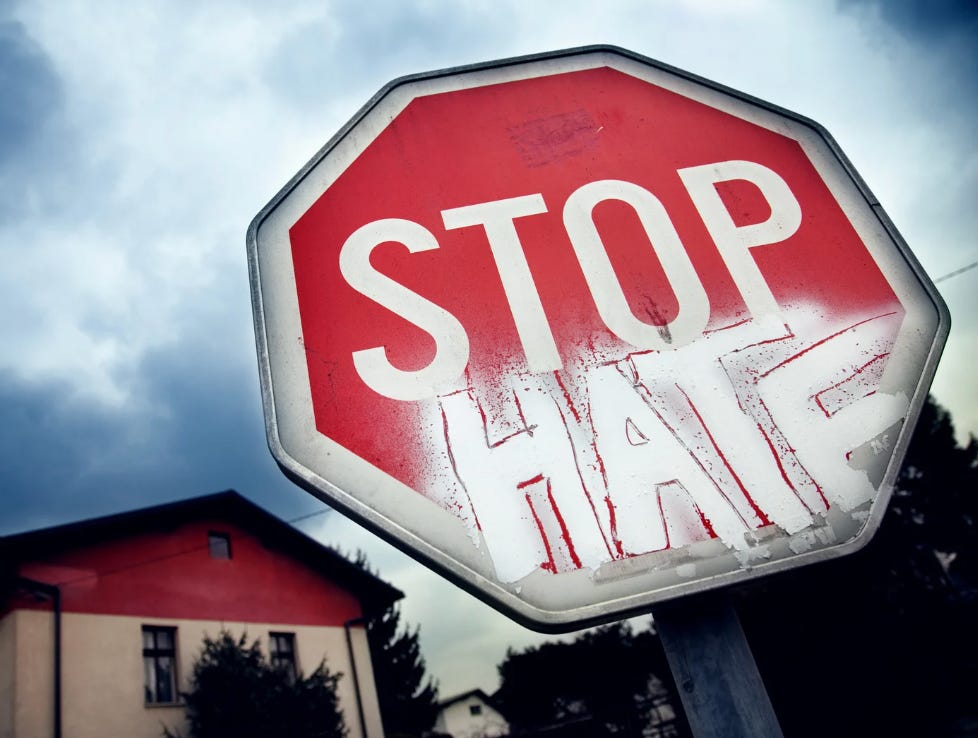
Hate is a good business model.
On April 21st, the Department of Justice indicted the Southern Poverty Law Center on eleven counts of wire fraud, false statements to banks, and conspiracy to commit money laundering. The indictment alleges that between 2014 and 2023, the SPLC secretly paid over $3 million in donor funds to leaders and members of the Ku Klux Klan, Aryan Nations, and other white supremacist groups.
The organization that gained renown for labeling conservatives as dangerous extremists? They spent at least a decade bankrolling actual extremists.
According to the indictment, the SPLC ran a covert network of paid informants—internally called “field sources” or “the Fs.” One informant in the neo-Nazi National Alliance received over $1 million. Another was paid $270,000 while serving in the leadership group that organized the 2017 “Unite the Right” rally in Charlottesville. That was the infamous event that left one woman dead—and inspired Joe Biden to run for president.
The Long Con Started in Montgomery
“In that moment, (Charlottesville) I knew the threat to this nation was unlike any I had ever seen in my lifetime,” Biden told supporters when he announced his candidacy in 2019.
We know now that much of that threat was expensively and carefully manufactured.
The SPLC was founded in 1971 in Montgomery, Alabama. They made their bones suing the Ku Klux Klan in state courts, sometimes recouping significant monetary damages. The sympathetic liberal media decided that anyone with the courage to sue the Klan in Alabama must have tremendous moral legitimacy. The SPLC and its leadership were soon venerated as heroes. The organization rapidly accrued not just legitimacy but significant cultural and political power.
That power grew exponentially after 1990, when the Center started publishing its annual census of “hate groups” in the United States. A fawning media cited those designations as authoritative, and before long, major corporations consulted the list before making donations or forming partnerships. By the time the age of social media arrived, the “hate map” functioned as a tool to ostracize, deplatform, and bankrupt conservatives. Anyone who suggested that these designations were unfair was accused of possessing Nazi sympathies. Long before anyone had coined the term “cancel culture,” the SPLC had become masters at destroying the careers of their critics.
Every Watchdog Needs a Wolf
In my book The Political Vise, I explain how progressive institutions extract wealth and power by creating permanent dependency on their services. Solving the problem eliminates the need for the institution, which would threaten both the money and the influence. All the incentives run towards ensuring a perpetual need, or warning of an ever-present danger.
The SPLC took this logic to its natural conclusion. One informant received a million dollars over nine years. As far as I am concerned, that’s a salary! The informant’s job wasn’t just to keep SPLC leadership apprised of what various “hate groups” might be planning, it was to ensure that the threat those groups posed seemed far greater than it really was. The SPLC could then fundraise off that embellished threat. It was a very lucrative business model.
The money spent on informant “salaries” proved an excellent investment. Between 2015 and 2024, the SPLC raised approximately $1.2 billion in donations. After the 2017 Charlottesville rally (organized by one of those paid informants), revenue nearly tripled from $51.8 million before Charlottesville to $133.4 million after. Apple CEO Tim Cook personally pledged $1 million. JPMorgan Chase gave $500,000. George Clooney’s foundation donated $1 million. The SPLC helped create an alarming (and deadly) spectacle, and corporate America responded.
Charlie Kirk Was on the List
The incentives are clear. The SPLC wields influence (and turns the levers of the progressive Political Vise) thanks to their self-proclaimed role as the indispensable watchdogs of extremism. That influence hinges on tens of millions of dollars in annual donations, donations that will quickly dry up if it is revealed that the “hate groups” SPLC monitors pose no real danger. If donors realize what the Klan truly is—a pathetic collection of aging and aggrieved men with no real power—the SPLC’s model collapses.
Put simply, the SPLC needs ongoing extremism the way a fire department needs ongoing fires. Except fire departments don’t bankroll arsonists.
What makes the SPLC’s grift so dangerous is that even while it bankrolled otherwise inconsequential extremists, it also spent years labeling mainstream conservative organizations as hate groups. Christian groups that advocated for traditional marriage, or against abortion? On par with literal Nazis.
In September 2025, conservative activist Charlie Kirk, the charismatic founder of Turning Point USA, was assassinated on a college campus in Utah. A year before his murder, the SPLC had labeled Charlie’s organization as extremist in their “Year in Hate and Extremism 2024” report. What was so hateful about Turning Point? It supported border enforcement and opposed the medical transitioning of American children. Common sense conservative values were, as far as the SPLC was concerned, no different than the noxious doctrines of the Klan.
This is the progressive Political Vise at work. The SPLC operated as what I call an “influencer” in the Vise framework: an institution that shapes the boundaries of acceptable discourse and applies pressure to politicians, corporations, and other institutions. When the SPLC designated someone or some group as extremist, the media amplified that designation, and the squeeze followed. And while the SPLC is not directly responsible for Charlie Kirk’s murder, their insistence that he led a “hate group” contributed to the culture that fed the paranoia and rage of Charlie’s assassin.
The Smear Machine’s Mileage Problem
The Justice Department’s case against the Center is not a slam dunk. Legal experts point out that the SPLC’s mission to infiltrate and dismantle extremist groups was never secret. Donors may have accepted that fighting these groups might require paying informants. Prosecutors will need to prove that donors felt deceived and that the money funded criminal activity rather than intelligence gathering. But though indictments may not lead to convictions, the revelations have already led to change. FBI Director Kash Patel severed the bureau’s relationship with the SPLC, calling it a “partisan smear machine.” Chick-fil-A, one of the South’s most beloved and respected family-held brands, told the New York Post that despite past donations, the SPLC was no longer “an organization that Chick-fil-A is involved with or supports in any capacity.”
The likelihood is that the SPLC will survive this indictment. Organizations with $850 million endowments rarely disappear. They’ll claim political persecution, point to their decades of civil rights work, and argue that infiltrating hate groups was necessary, brave and noble. Other progressive organizations will rally to their side. The SPLC is far too valuable an ally for the left to abandon.
But whether the SPLC survives or not, the truth is out in the open. We now know that the same organization that called Charlie Kirk a hateful extremist was putting millions into the pockets of actual neo-Nazis. We now know that the SPLC manufactured white supremacist spectacles like Charlottesville to drive donations. And perhaps most importantly of all, the public now knows that in funding the enemy it claimed to fight, the SPLC embodied the business model of the contemporary American left.