

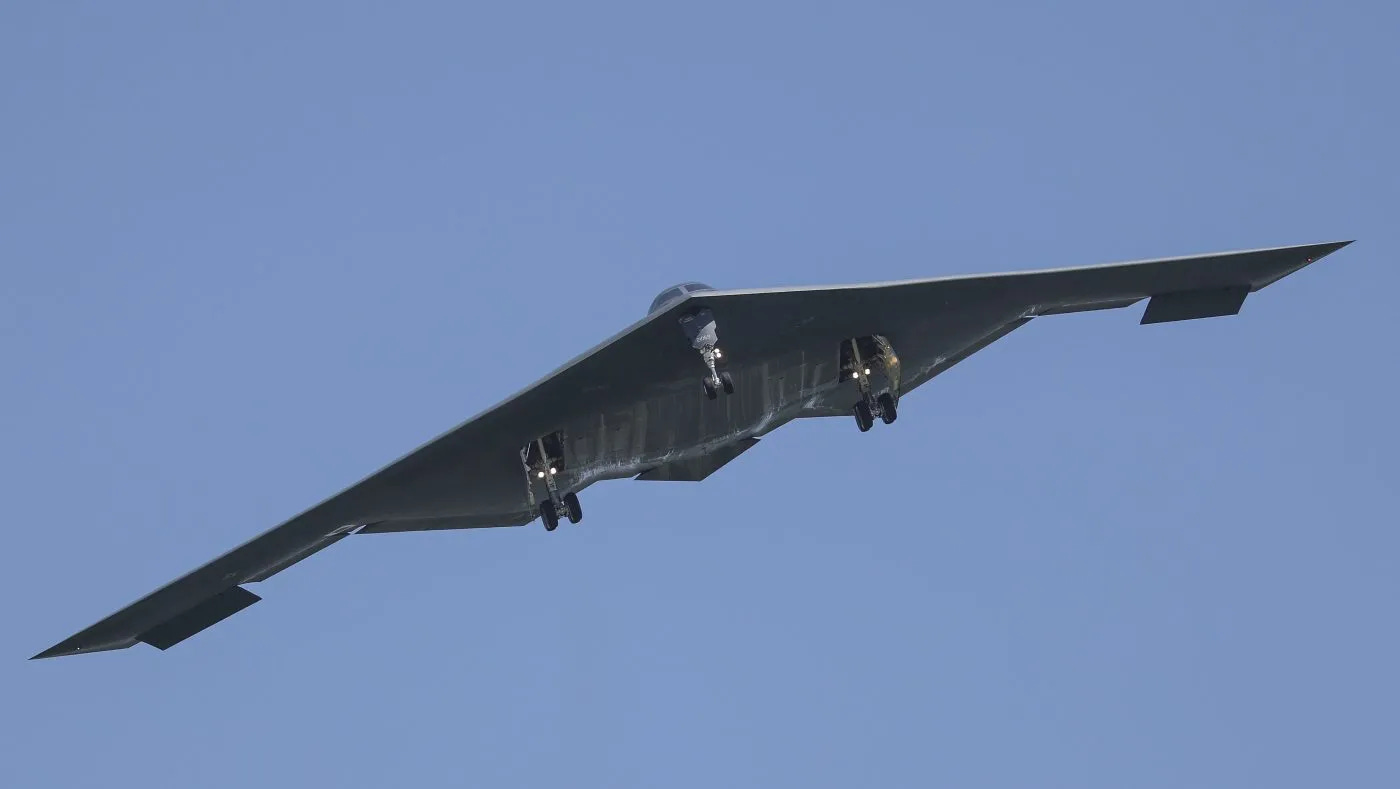
When American B-2 bombers flew their strike missions against Iran’s nuclear facilities, they didn’t take the most direct route.
They couldn’t.
France and Spain denied overflight rights, forcing our pilots to fly thousands of additional miles en route to their targets. As former White House Press Secretary Ari Fleischer noted in an X thread that drew 2.4 million views last week, this from two nations that never miss an opportunity to lecture the world about carbon footprints.
The round trips took 37 hours and each B-2 costs roughly $135,000 per flight hour. This math is simple, and so is the message underlying it: two of America’s oldest European allies decided that when the moment came to support a mission against the world’s foremost state sponsor of terrorism, they’d rather make American pilots absorb the additional risk and cost of going the (very) long way around.
This isn’t a story about NATO burden-sharing. (That debate has been going on for decades, and frankly, most people are tired of hearing about it.) Instead, it’s a story about a global sorting that the Iran war has made impossible to ignore.
When the shooting started, the world broke into two groups: nations that showed up and nations that issued statements. The composition of those two groups tells you nearly everything you need to know about the direction that geopolitical power is trending.
A Tale of Two Europes
In his X post, Fleischer drew a sharp line between Western and Eastern Europe, and the data backs him up completely.
Poland now spends 4.5% of its GDP on defense, the highest in NATO and more than double the alliance’s longstanding 2% benchmark. Lithuania is at 4%. Latvia is at 3.73%. Estonia exceeds 3.3%.
These are neither large countries nor are they wealthy. But as former satellites of the Soviet Union, they are countries that remember what happens when you depend on someone else to fight for you.
At the 2025 NATO summit, the alliance agreed to a new 5% spending target by 2035, with 3.5% earmarked for core military capabilities. Poland and the Baltic states are already there, or close to it, a full decade ahead of schedule. Northern European nations like the Netherlands and the Scandinavian countries have announced major increases and pledged to meet the target by 2029.
And then there is Spain. Prime Minister Pedro Sánchez formally requested and won an exemption from the new spending target, calling it “unreasonable and counterproductive.” Spain has capped its defense budget at 2.1% of GDP. Its spending was essentially flat for over a decade, with 2022 levels matching what the country spent in 2008 in real terms.
This is the same Spain that denied American pilots access to its airspace en route to Iran.
Italy’s trajectory is similar, after a decade of stagnation followed by modest growth that has only recently brought spending back to 2008 levels. France, for all its diplomatic pretensions, hovers around 1% and has been content to let the conversation about increased spending remain theoretical.
The contrast is not subtle. The nations of Eastern Europe, the ones that lived under Soviet domination for half a century, are investing as if their survival depends on it.
Because they believe it does.
They don’t confuse communiqués with security. They have an institutional memory of the danger weakness invites, and they are determined not to repeat the experience.
Western Europe’s legacy powers—France, Spain, Italy—have no such memory. Their political classes grew up in a world where American power guaranteed their safety regardless of how much or how little they contributed.
That guarantee held for more than seventy-five years. It is no longer holding.
Strait Bedfellows
The realignment isn’t confined to Europe. Look at who actually backed the Iran strikes: the United Arab Emirates, Kuwait, Saudi Arabia, Jordan, Qatar. These are not NATO members, nor are they liberal democracies. They have not signed the kinds of treaties that fill filing cabinets in Brussels. But just as they have a clear-eyed understanding of the Iranian threat, they also possess both significant military capability, and the willingness to use it.
This coalition didn’t materialize out of nowhere. It has a deep structural logic that Western foreign policy commentators routinely underestimate or ignore: the Sunni-Shia divide. Iran is the world’s preeminent Shia power, and for decades it has used that sectarian identity to project influence (and terror) across the Middle East. The Gulf Arab states are overwhelmingly Sunni. They don’t oppose Iran because Washington asked them to. They oppose Iran because they have watched Tehran build a network of Shia proxy militias—Hezbollah, the Houthis, Iraqi paramilitaries—designed to destabilize their sovereign governments and threaten their borders.
For the UAE, Saudi Arabia, Kuwait, Jordan, and Qatar, the American campaign against Iran isn’t someone else’s war. It’s the war they’ve been preparing for, in one form or another, for a generation. For them, it’s existential.
Writing in Foreign Policy, RAND strategic analyst Raphael Cohen offered what Francis Sempa of The American Spectator rightly called a more balanced assessment of the war’s progress than most of Trump’s critics have managed. Cohen noted that the U.S. and Israel have made significant operational progress: degrading Iran’s missiles and missile industry, destroying its navy, weakening its proxy network, and further diminishing its nuclear weapons capability. Diplomatically, the Gulf states have sided decisively with the U.S. and Israel against Iran. That sentence would have been unthinkable fifteen years ago.
Meanwhile, the same Western European nations that denied overflight rights continue to purchase Russian LNG, as Fleischer pointedly observed. France, in particular, remains “good at issuing communiqués and statements,” skilled at “hosting conferences,” and devoted to “pondering deeply.” Yet they continue to buy energy from the country NATO was originally created to deter.
The emerging coalition has no charter and no headquarters. It’s built on something both simpler and more durable than institutional architecture: shared threat perception and demonstrated willingness to actually act. The UAE didn’t show up because of a treaty obligation, just as Poland didn’t surge its defense spending because of a summit declaration. They did it because they understand that in a world where power is being contested, the only credential that matters is capability and the willingness to deploy it.
The nations and institutions that maintained their influence by controlling access to airspace, to diplomatic channels, and to the machinery of international consensus are watching that leverage evaporate. The nations that invested in actual capability are gaining influence with every passing month.
Credentials vs. Capacity
If this dynamic sounds familiar, it should. The same sorting is playing out domestically.
Mark Penn and Andrew Stein made a striking observation in their Wall Street Journal op-ed this week. Only 13% of young Americans believe the country is headed in the right direction, according to Harvard’s most recent youth poll. Meanwhile, in Israel—a nation that has been at continuous war for over two and a half years—a Lazar research poll found that 68% of young people express pride in being Israeli, and 79% report being satisfied with their lives.
This gap cannot be about material conditions. America’s middle class is growing. We lead the world in artificial intelligence, and we just sent astronauts to the moon for the first time in over half a century.
By almost any objective measure, this country is in a stronger position than it has been in years.
The pessimism isn’t a reflection of reality. It’s a product of our elite institutions that have spent years manufacturing the impression that America is failing. These are the domestic equivalents of France and Spain: entities that maintain their influence not through capability or results, but through credentialed authority and institutional inertia. They issue statements and host conferences. They ponder deeply. And when the moment comes to actually deliver—to secure a border, to support an ally—they are nowhere to be found.
The people and institutions that are showing up, here and abroad, don’t look the way the foreign policy establishment or the legacy media expected. But what they have is clarity about the threat, investment in their own capacity, and the nerve to take action.
The Map After the War
The fragile ceasefire with Iran is a reprieve, not a solution. The Strait of Hormuz remains the central dilemma. The negotiations may succeed or they may fail. But what will not change, regardless of how the ceasefire resolves, is the realignment it exposed.
Western Europe’s legacy powers will not suddenly become serious military partners, Spain will not double its defense budget, and France will not stop buying Russian energy. These nations have made their choices, and those choices reflect a political class that has confused comfort with security and prestige with power. They are, to borrow Fleischer’s formulation, “laggards, trying to get away with it.”
For decades, they did get away with it. That era is ending.
What’s emerging in its place is harder to categorize (and harder to romanticize). It’s not a “coalition of the willing” in the Bush-era sense, and it’s certainly not a new NATO. It’s something less formal but potentially more honest: a network of nations and institutions that have earned their relevance by investing in capability and demonstrating the will to use it: Poland and the Baltics, the Gulf Arab states, Israel, and the private-sector innovators who are building the military logistics of the future. These are the partners who will matter.
You can bet that the old institutions will resist this framing, just as they always do. The foreign policy establishment has enormous institutional incentives to maintain the fiction that the organizations they built and staffed and funded remain indispensable. But the Iran war has laid the reality bare for anyone willing to look at it honestly.
The world is being sorted not by ideology, nor by geography. It’s being sorted by a simpler and more ancient criterion: who is willing to do the hard thing when the hard thing needs to be done.
The countries that answered that question this spring told us everything we need to know about the next chapter of American power.