

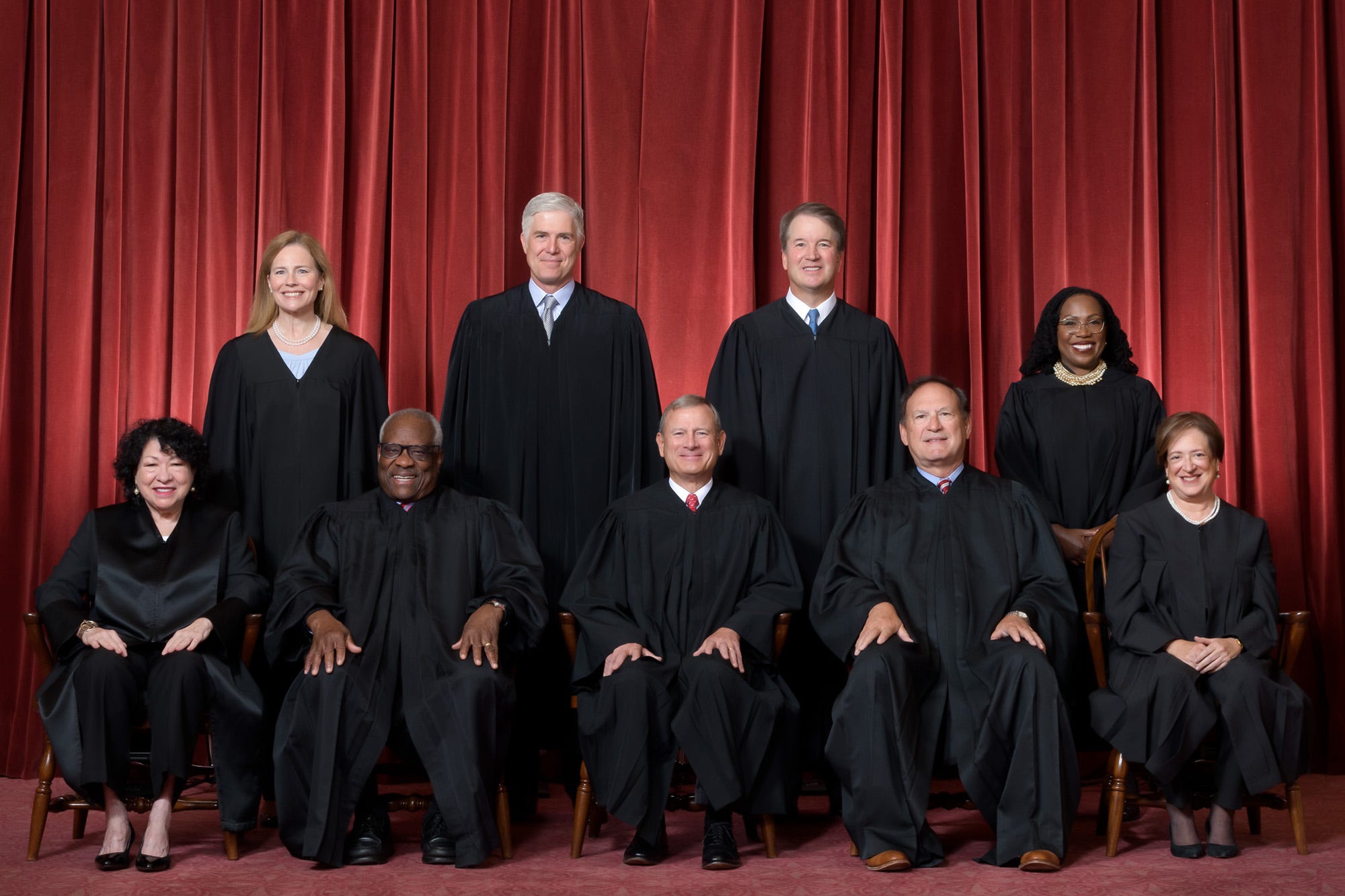
When it comes to the American left, I sometimes play something I call the “opposite game.” The rules are straightforward. Whatever a far-left politician or pundit declares bad is almost good, and vice-versa. There are times that game proves too simplistic, but not as often as you’d think. My favorite current example comes from Georgia Democratic Senator Raphael Warnock, who declared that last week’s Supreme Court decision in Louisiana v. Callais“is nothing less than a massive and devastating blow, not only to our democracy, but particularly to people of color in the South.”
The Senator has it, of course, exactly backwards. Callais is indeed a massive and devastating blow, but it was delivered against the very structures that have marginalized and disempowered black Americans. Callais, as I understand it, restores the nearly forgotten commitment to not just equal opportunity under the law, but equal treatment as well. The future for Americans of all races and ethnic backgrounds is brighter as a result.
That’s quite a claim about a 6-3 high court decision that invalidated legislative districts specifically crafted based on race. Leaving aside the opposite game, Democrats like Senator Warnock are right to be worried that certain safe House seats (traditionally gerrymandered to ensure black majorities) will now be up for grabs in the upcoming midterms. To entrenched incumbents who take black voters for granted, Callais is terrifying. For everyone else—very much including those black voters—the consequences are much more promising.
The Containment Strategy
Under the race-based districting regime, reliably conservative Southern states would carve out one or two “black majority” districts. Black voters got concentrated into those districts. The remaining majority-white districts then had very few black constituents. Politicians in those white districts had no incentive to address black concerns. Meanwhile, black voters found themselves in a political ghetto. They had one or two elected representatives, but no real power.
When you segregate a group of people into an enclave, rigid ideological conformity takes hold. Peer pressure, coercion, shame, and shunning enforce that conformity. Inside a racially gerrymandered district, one party dominates. Power is often passed down within families or social networks. A few benefit at the expense of the many.
In my book The Political Vise, I explain how progressive institutions extract power by creating permanent dependency. They build and maintain what I call grievance coalitions. These function in perpetuity because grievances (as we have all seen from social media) can be manufactured and sustained. Over time, those grievances become the glue binding people to a political party. Resentment is a feeling, not an economic state. No matter how prosperous you become, you can be made to believe you’ve been held back by your skin color.
The perversion is that race-based districts were sold as protecting black voting power. They accomplished the opposite. They isolated black voters politically, allowed white-majority districts to ignore black concerns, and created exactly the political dependency (sustained by grievance) that the left relies upon.
The Math Has Now Flipped
Callais changes the incentives. In apportioned districts without racial gerrymandering, black Americans will often be a minority. That’s a simple demographic reality. But as a minority, they can swing an election. Politicians in fairly designed districts will need to address black voters’ concerns. A candidate who ignores those concerns will risk losing their seat.
In heavily Republican districts in the South, the outcome of competitive primary races between multiple conservative candidates may hinge on successful appeal to black voters. In ruby red states where racial gerrymandering was entrenched, Callais will expand (rather than diminish) black influence. Thomas Sowell, the hugely influential black economic historian, has long implored his fellow African Americans to leave what he calls the “Democrat plantation.” Callais presents an opportunity for millions to do just that.
We’ve already seen monolithic Democrat voting among black Americans declining under Donald Trump. In 2020, Trump received 8% of the black vote according to AP VoteCast. In 2024, he received 15% according to Pew Research—nearly doubling his support. More dramatically, exit polls showed Trump winning 20% of the black vote overall and 24% among black men specifically. CNN polling analyst Harry Enten reports that in 2026, Trump’s approval rating among black voters stands at 16%—up from 12% during his first term. These numbers may seem small, but Enten describes them as “generational gains.” When districts are no longer gerrymandered to produce Democrat black grievance candidates, that trend will accelerate.
Old Patterns and Modern Politics
The Democrat Party has pursued power through racial division since its inception. Democrats defended slavery before the Civil War, imposed Jim Crow after it, and fought integration for a century. When Lyndon Johnson signed the Civil Rights Act in 1964, he reportedly told an aide “I’ll have those n-----s voting Democratic for 200 years.” The strategy shifted from physical segregation to political segregation, from controlling black Americans through law to controlling them through dependency.
Race-based Congressional districts served that strategy, functioning as political enclaves where black voters were told their only path to power ran through Democrat politicians fighting for government programs. Republicans, safe in majority-white districts, had no incentive to compete for black votes. Black voters remained captured, dependent, and reliably Democrat.
The Progressive Political Vise depends on racial division. It requires black Americans to believe their interests are fundamentally opposed to white Americans’ interests. When black and white voters share the same representative, attend the same town halls, and voice the same concerns about schools and taxes and public safety, that narrative collapses.
For sixty years, the left has maintained political segregation through grievance, dependency and racial gerrymandering. Callais upends a regime, and it breaks a cherished lever of the Progressive Vise. Last week’s Supreme Court decision is indeed “a massive and devastating blow” to those who have run that regime. For everyone else—especially black Americans—Callais marks the start of a new and long-overdue era of opportunity.